


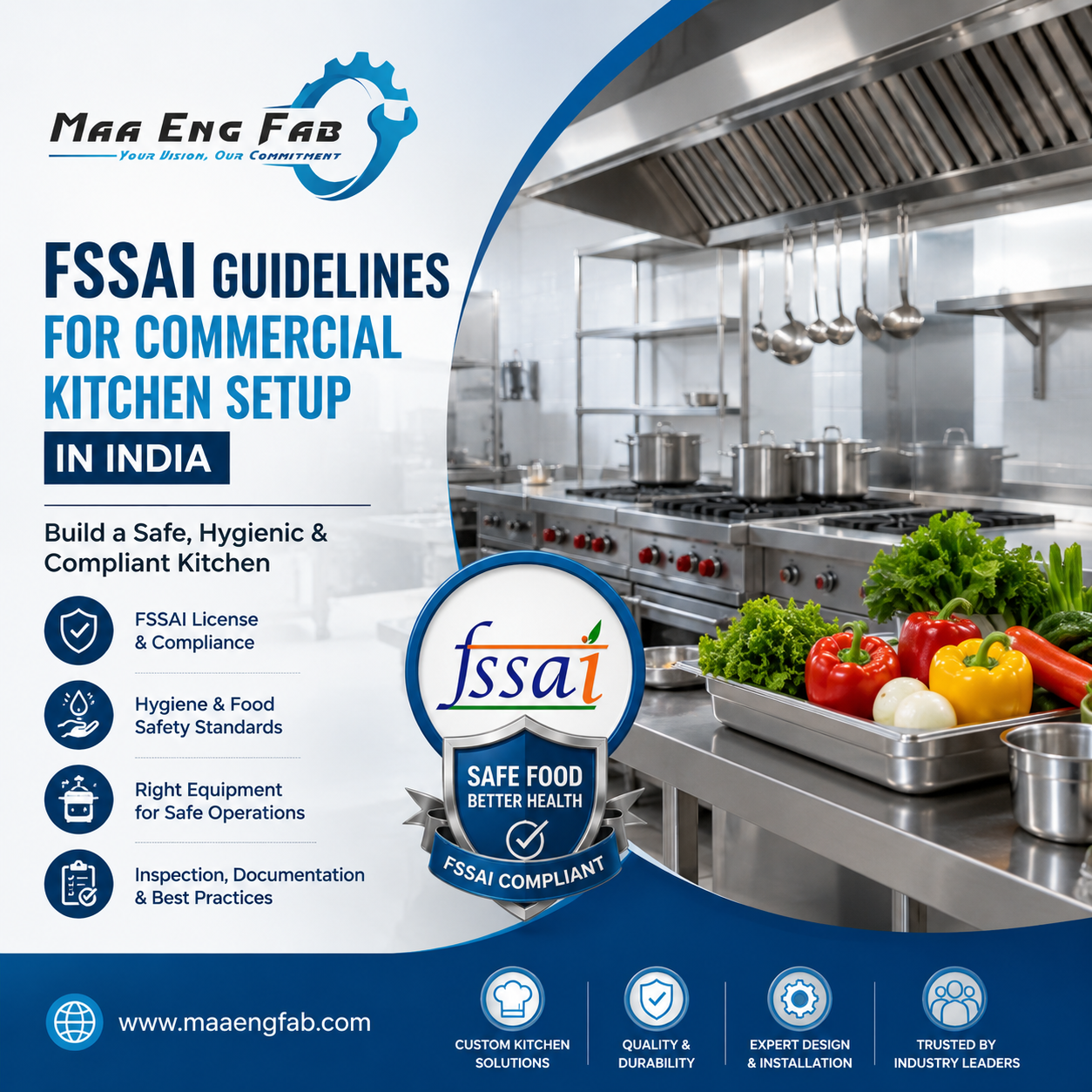
FSSAI Commercial Kitchen Guidelines
The process of setting up a commercial kitchen is much more complicated than just installing the equipment for cooking. If you open a restaurant, cloud kitchen, hotel kitchen, catering business, or food processing factory, you have to be compliant with FSSAI regulations. The compliance with FSSAI Commercial Kitchen Guidelines will help you achieve food safety, increase your efficiency, and avoid any problems.
A correctly designed Commercial Kitchen Setup India is helpful not only to run your kitchen efficiently but also to reduce the risk of food contamination, increase the effectiveness of your workers, and simplify inspection. Companies that create an FSSAI-compliant kitchen setup have a higher chance of maintaining a high quality of their food and successful operation.
Why FSSAI Compliance Is Essential for Commercial Kitchens?
FSSAI compliance is essential for every commercial kitchen in India. This compliance ensures that food is prepared, stored, and served as per the national food safety standards of India. Below given FSSAI guidelines helps maintain proper hygiene, prevent food contamination, and protect customer health. It also helps in reducing the risk of legal penalties and business disruptions. By following FSSAI compliance, food businesses can establish their brand reputation and build customer trust. FSSAI-compliant kitchens create safe environments for all type of food businesses such as restaurant, hotel, cloud kitchen, cafeteria, and catering service supporting smooth business operation.
Importance of Food Safety
Food safety is the basis for every food business. With a clean commercial kitchen, the probability of food contamination and illness decreases. Proper sanitation, clean equipment, and organized work space provide you with the opportunity to keep the food safe during all stages – preparation, cooking, storing, and serving.
Legal Requirements for Food Businesses
FSSAI laws stipulate that eligible businesses should have the right license or registration before starting their operations. Adhering to the FSSAI law also involves meeting hygiene requirements, proper handling of foods, storage, food disposal, documentation as outlined in the Food Safety and Standards Act.
Benefits of FSSAI Compliance
Compliance with the FSSAI helps businesses to not only meet legal obligations but also build customer trust. This is because compliance leads to reduced risks, successful inspections, good hygiene among employees, reduction of food wastage, and improved reputation of restaurants and food service providers.
What Is FSSAI?
FSSAI is actually Food Safety and Standards Authority of India. It is a statutory body that helps in regulating food safety in India. This body makes regulations and guidelines. This is for food manufacturing, food storage, sale, and food service businesses.
Role of FSSAI
FSSAI regulates food safety guidelines, licenses, hygiene, inspections, and food quality among others in food businesses.
Types of FSSAI Licensing
(FSSAI) Food Safety and Standards Authority of India offers three types of licenses based on type, size and turnover of the businesses.
- FSSAI Basic Registration – For start-ups and small food businesses (Local vendors, home food business, small eateries) with annual turnover of up to ₹12 lakh.
- FSSAI State License – For medium-sized food businesses (Restaurants, Hotels, Caterers, Commercial and Cloud Kitchen) with an annual turnover up to ₹20 crore
- FSSAI Central License – For large food businesses (Exporters, Importers, Food companies, Multi state food business) with an annual turnover more than ₹20 crore.
Key FSSAI Guidelines for Commercial Kitchen Setup
Food Safety and Standards Authority of India (FSSAI) guidelines are necessary to setup commercial kitchens in India. It needs to implement Good Hygiene Practices, Good Manufacturing Practices and Food Safety Management System to ensure quality, safety and hygiene for customers and employees.
Design of Commercial Kitchen
A good Commercial Kitchen Design India must facilitate easy work flow and avoid any cross contamination. It increases efficiency and maintains food hygiene.
Lighting Requirements
Proper lighting requirements should be maintained in all food preparation and cooking areas. Lighting is necessary during cooking, cleaning, and food preparation processes for better visibility and improved safety and hygiene checks.
Food Storage Areas
Separate storage areas for dry food, refrigerated food, frozen food, cleaning chemicals and packaging material should be made available in commercial kitchens.
Pest Control
Regular pest control program is required to get rid of rodents, insects, and other types of pests from the food area.
Personal Hygiene Facilities
Facilities such as hand washing facilities, clean toilets, changing area, and hygiene products should be provided to staff members as cleanliness prevents contamination when food is prepared.
Essential Commercial Kitchen Equipment for FSSAI Compliance
Choosing the right commercial kitchen equipment is essential for maintaining quality, hygiene and food safety. Reliable commercial kitchen equipment provide durability, easy maintenance, and good food quality and contamination prevention. Some of the important kitchen equipment are given below for FSSAI-compliant commercial kitchens.
- Commercial Cooking Range – helps to prepare food effectively
- Exhaust Hood & Ducting – removes smoke, grease, heat, and airborne contaminants
- Stainless Steel Work Tables – help maintain hygiene and reduce the risk of bacterial growth.
- Commercial Refrigeration – store food ingredients in appropriate temperatures.
- Storage Racks – keep food ingredients stored properly and make them easily accessible.
- Three Compartment Sink – for washing, rinsing, and sanitizing utensils and cookware.
- Hand Wash Stations – to encourage proper hygiene among staff.
- Food Grade Storage Containers – to store raw materials, spices, and prepared food safely.
- Waste Management Equipment – for wet and dry waste segregation
- Fire Safety Equipment – Install for the kitchen’s overall safety infrastructure
- Water Purification System- Use only potable water for cooking, food preparation, and cleaning
Kitchen Design Best Practices
Segregate Raw from Cooked Food Preparation Area
Separation of raw and cooked food preparation areas decreases the chances of contamination.
Smooth and Washable Surfaces
Walls, ceilings, floor and work surfaces must be strong, washable and non-porous. They help keep the kitchen clean because smooth surfaces collect less dust.
Adequate Work Area
There should be enough workspace so that food preparation can be done without obstruction.
Workflow Design
The Commercial Kitchen Layout should be designed to allow for efficient workflow from receiving and storage through preparation, cooking, plating, and serving.
Fire Safety Regulations
Commercial kitchens should have fire extinguishers, exits, fire suppression system, gas leak detector (if gas is used) and evacuation plan.
Common Mistakes to Avoid During Commercial Kitchen Setup
Poor Kitchen Layout
The layout is poorly designed which means that there will be workflow congestion, additional labour, and higher contamination possibilities.
Lack of Proper Ventilation
This causes excessive heat, poor air quality, grease build-up, and difficult working conditions.
Poor Drainage System
It might lead to water accumulation, bad smells, bacterial growth, and increased cleaning activities.
Poor Quality Kitchen Tools
Using poor quality kitchen tools causes higher maintenance costs and reduces kitchen efficiency and tool life.
Incorrect Food Storage Methods
Storage at wrong temperature and disorganization of food inventory causes spoilage and contamination of food.
Disregarding FSSAI Hygiene Standards
Disregarding Kitchen Hygiene Standards may result in fines, inspection failures, complaints of clients, and negative reputation.
Industries That Need FSSAI-Compliant Commercial Kitchens
Restaurants
The Restaurant requires a good kitchen layout for preparing a large amount of food products hygienically and safely.
Hotels
The Kitchen of Hotels should be capable of handling various cuisines, banquet services, room service, and constant work.
Cloud Kitchens
The Kitchen of Cloud Kitchen Setup India should focus on optimal workflow, efficiency in delivering the product, and food safety.
Cafes
Compact and well-organized kitchen layout for café helps prepare beverages, bake, and cook food items.
Catering Businesses
Commercial kitchens have to be designed to produce bulk quantities of food while keeping hygiene standards constant.
Food Courts
Kitchens in food courts have to be efficient enough in providing for the quick food preparation in the presence of many customers.
Hospitals
The kitchens in hospitals need to adhere to certain hygiene measures in order to prepare healthy meals according to individual patient requirements.
Educational Institutions
College and school kitchens need to be hygienic enough in preparing meals despite having many students to feed.
Industrial Canteens
Industrial kitchens need to have Industrial Kitchen Equipment that can produce many meals without compromising on food safety.
Why Choose Maa Eng Fab for Commercial Kitchen Setup?
Maa Eng Fab is known as one of the reputed Kitchen Equipment Manufacturer in India. We specialize in manufacturing top quality kitchen equipment range for all types of commercial kitchen setup. Our offered kitchen equipment solution is developed as per the latest FSSAI guidelines. We offer customized kitchen setup to fulfil varied requirements of various hotels, restaurants, canteens, cafeterias, cloud kitchens, institutional and industrial kitchens. We focus on hygiene, durability, safety and quality while using food grade stainless steel materials to help food businesses meet FSSAI regulatory requirements. Maa Eng Fab is one of the reliable partner for your food business as we provide best support, custom solution and timely execution. You can choose Maa Eng Fab for creating complaint commercial kitchen setup in India.
Frequently Asked Questions
Is FSSAI license necessary for restaurant businesses?
Yes, almost all restaurants require FSSAI registration or license.
How can a hygienic kitchen be designed?
The kitchen layout for hygiene requires the presence of separate zones for raw and cooked foods, washable surfaces, proper ventilation, and effective drainage system, washing stations for hands, appropriate storage, and effective workflow.
Do you have any suggestions for designing an FSSAI approved kitchen?
Certainly. Being a Commercial Kitchen Manufacturer with extensive experience in providing Kitchen Setup Services, we will gladly offer our expertise and help you design your kitchen according to FSSAI standards.
Conclusion
Efficient commercial kitchen depends not only on proper planning and quality equipment but also on compliance with food safety regulations. The FSSAI Commercial Kitchen Guidelines help businesses create hygienic, efficient and legally compliant food preparation facilities.

One thought on “FSSAI Guidelines for Commercial Kitchen Setup in India”